FREE RESOURCES
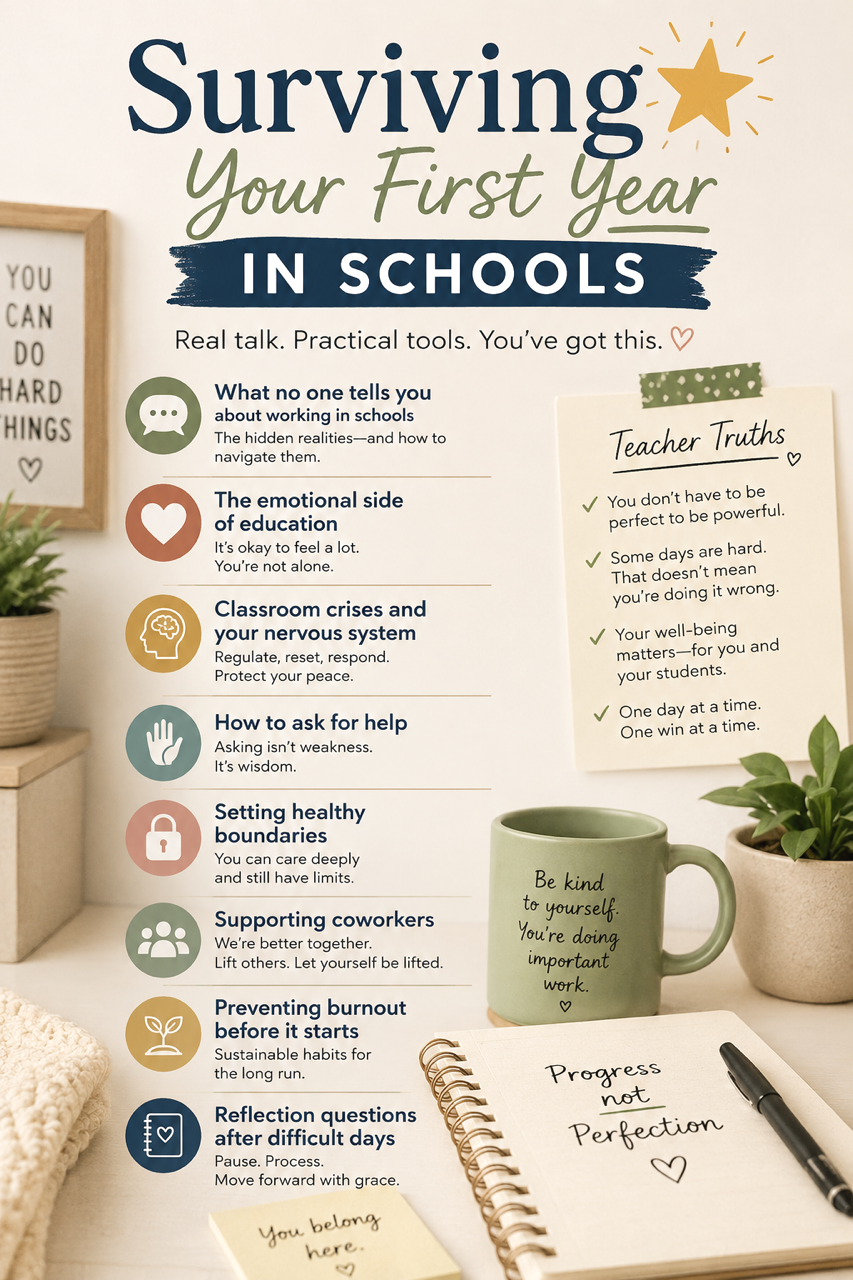
Surviving Your First Year In Schools
Beginning a career in education is exciting, inspiring, and meaningful. It can also be overwhelming in ways that many new educators never expect.
Most teacher preparation programs do an excellent job teaching curriculum, instructional strategies, and assessment. What they often have less time to prepare educators for is the emotional side of the profession.
Working in schools means celebrating incredible success while also experiencing disappointment, uncertainty, conflict, grief, and moments of crisis. You may support students through trauma, navigate challenging behaviors, comfort families, respond to emergencies, and carry the emotional weight of wanting every child to succeed.
None of this means you are doing something wrong. It means you are doing work that asks a great deal of the people who choose it.
This resource was created to help bridge that gap. Whether you are entering your first classroom or beginning a new role, these topics are designed to support not only your professional growth, but your personal well-being.
As you explore these resources, remember one important truth: YOU DESERVE SUPPORT, TOO

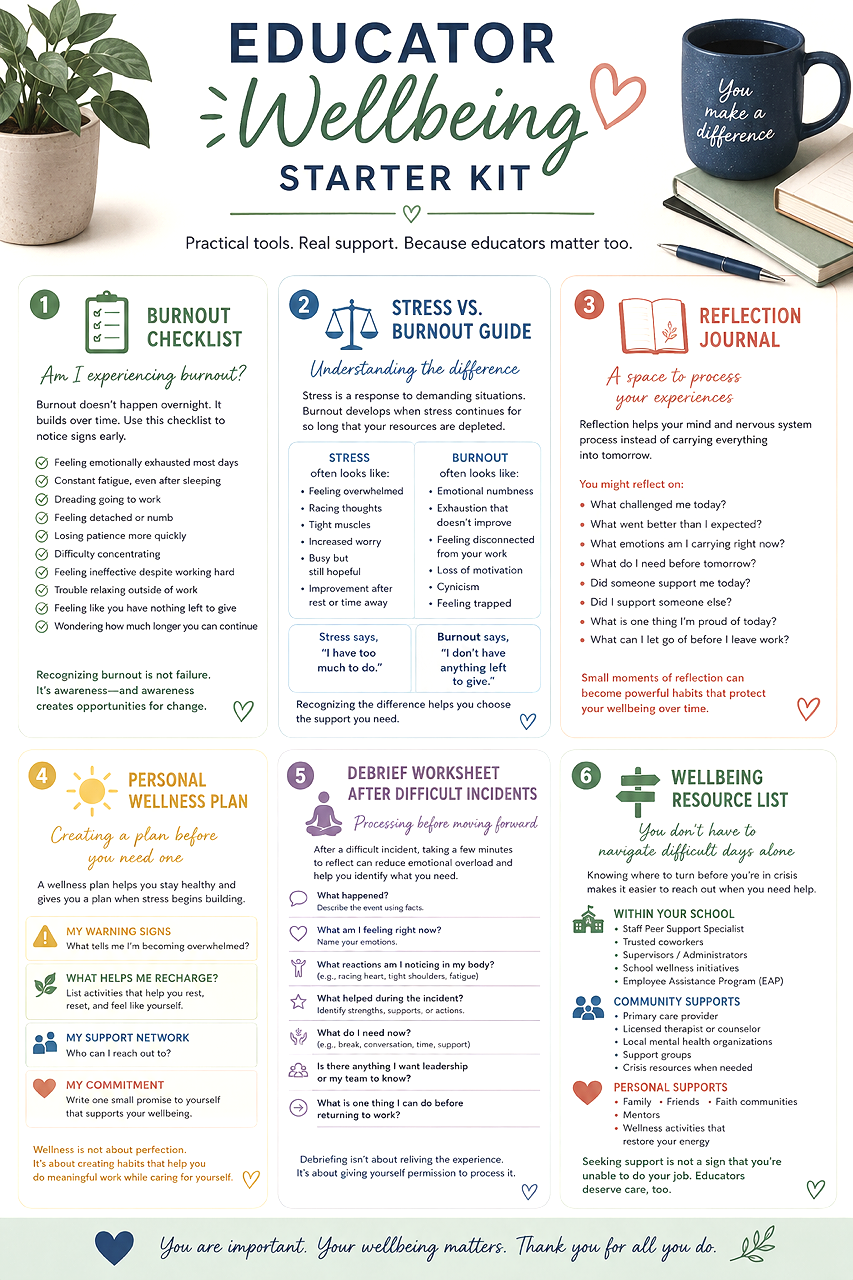
EDUCATOR WELLBEING STARTER KIT
Supporting others begins with supporting yourself.
Educators give so much of themselves each day. They manage classrooms, respond to unexpected challenges, support students through difficult moments, and often carry responsibilities that extend far beyond instruction. In the midst of caring for everyone else, it’s easy for your own wellbeing to become an afterthought.
The Educator Wellbeing Starter Kit was created to provide practical, compassionate resources that support the people behind the profession. Whether you are new to education or have spent years in the classroom, these tools are designed to help you recognize the signs of stress and burnout, process difficult experiences, reflect on your wellbeing, and connect with meaningful support.
Inside this kit, you will find a burnout checklist, a guide to understanding stress versus burnout, reflection prompts, a personal wellness plan, a debrief worksheet for challenging incidents, and a list of helpful wellbeing resources.
You don’t have to wait until you are overwhelmed to care for yourself.
The hope is that these resources encourage small, intentional moments of reflection and self-care — because healthy educators are better equipped to support their students, their colleagues, and themselves.
You deserve the same compassion and care that you so freely give to others.

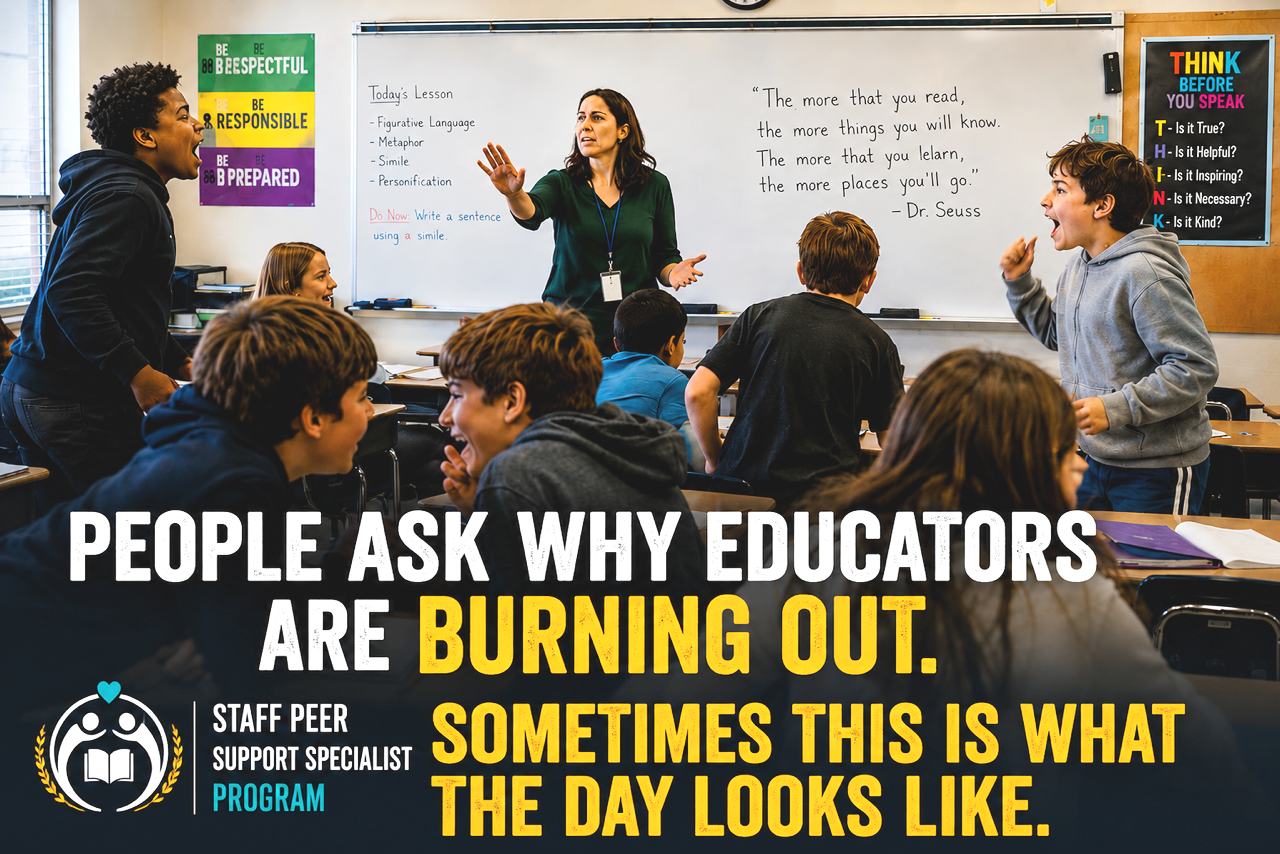
RETURNING AFTER PERSONAL LOSS
Behind every educator is a person with a life beyond the classroom. Sometimes that life includes profound loss— such as the death of a loved one, pregnancy loss, serious illness, or another life-changing event.
Returning to work after personal loss can be one of the most difficult transitions an educator faces. While the school day continues, grief doesn’t simply disappear when someone walks back through the classroom door.
This resource was created to acknowledge that reality. It offers guidance, reflection, and practical support for educators navigating the return to work after personal loss, while also encouraging schools and coworkers to foster a culture of compassion, understanding, and support.
CLASSROOM CRISIS TOOLKIT
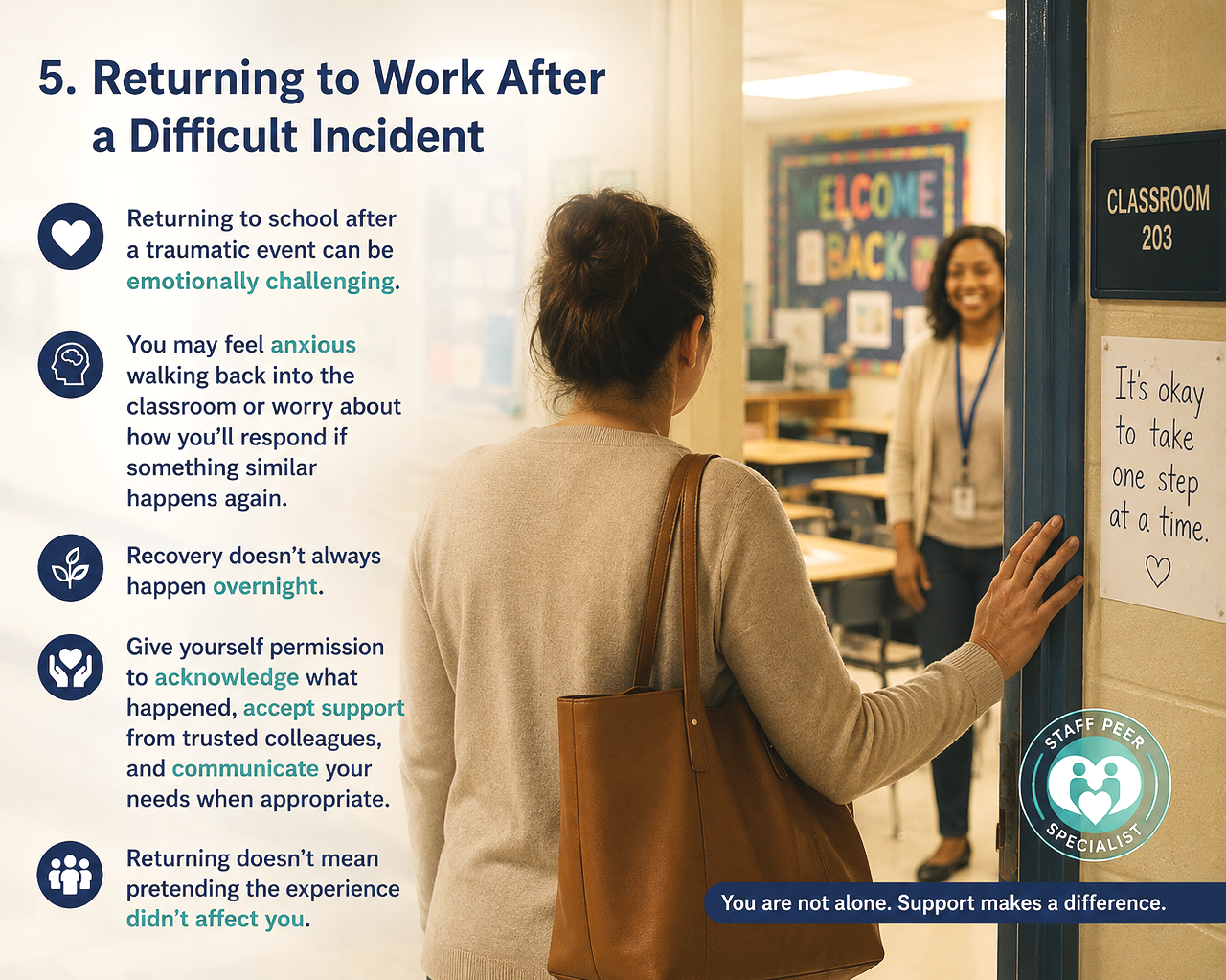
Classroom crises can happen without warning and may leave a lasting impact on the educators involved. While much attention is often focused on students, it is equally important to recognize that school staff can also experience emotional and physical stress following difficult incidents.
The Classroom Crisis Toolkit was created to help educators better understand their responses after challenging events, explore practical strategies for recovery, and recognize when additional support may be helpful. Whether you are processing a recent classroom incident or preparing to support a colleague, these resources are here to remind you that your wellbeing matters, too.
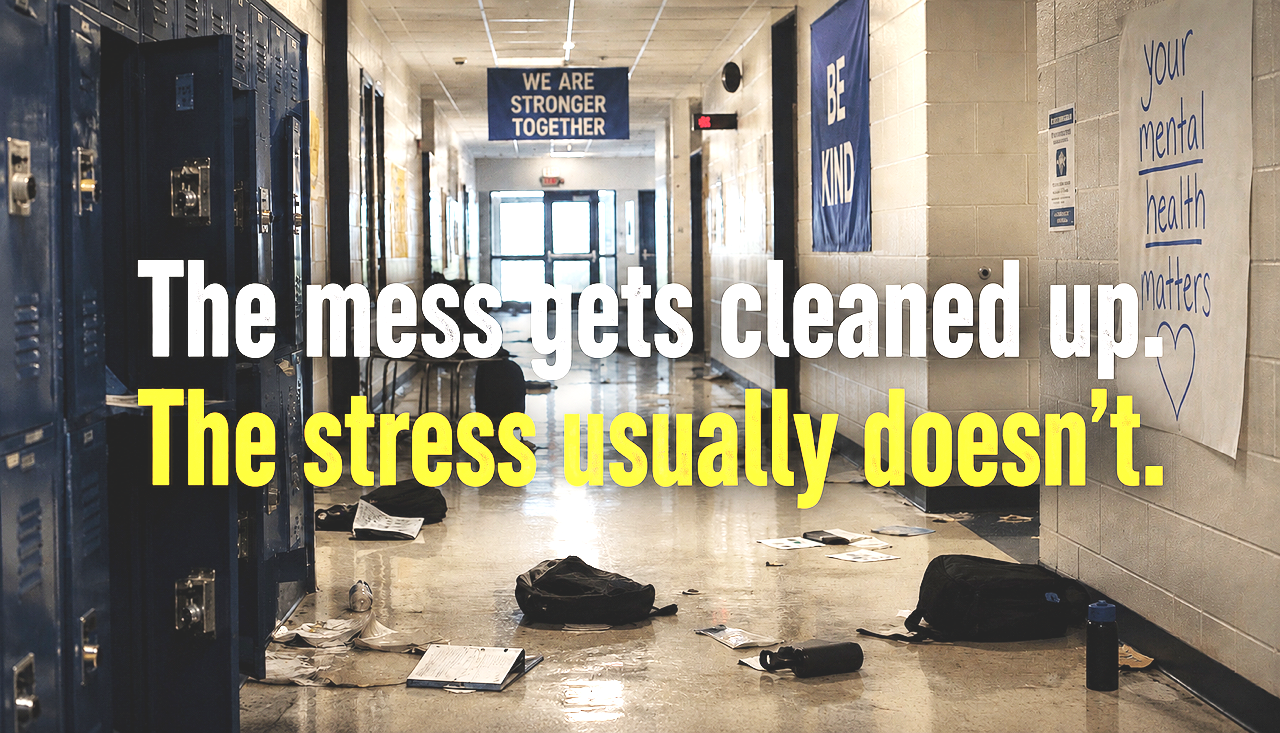
LEADERSHIP RESOURCES
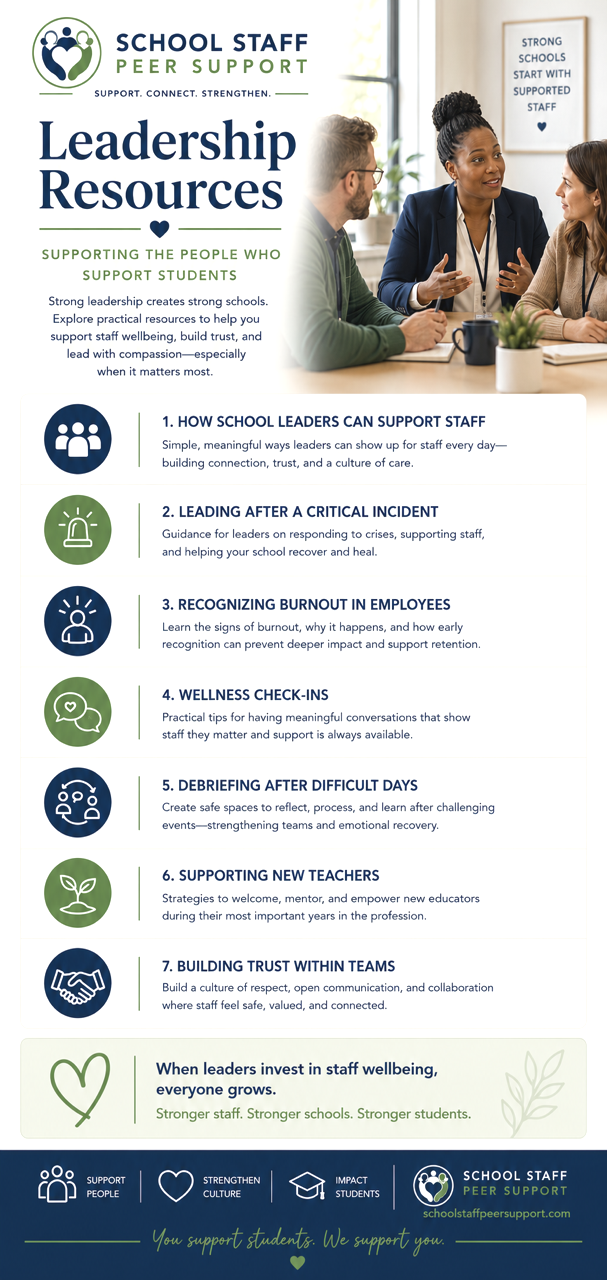
Strong schools begin with strong leadership—but strong leadership isn’t about having all the answers. It is about creating an environment where people feel valued, supported, and safe enough to ask for help when they need it.
School leaders have the opportunity to shape a culture where well-being is recognized as an essential part of a healthy, thriving school community. A simple check-in, thoughtful follow-up after a difficult day, or creating space for honest conversations can have a lasting impact on staff morale, resilience, and retention.
These resources are designed to help principals, assistant principals, department heads, and school leaders build trust, support their teams, and foster workplaces where educators feel cared for—not just as professionals, but as people.
Because when leaders invest in their staff, everyone benefits—educators, students, and the entire school community.
EDUCATOR WELLBEING
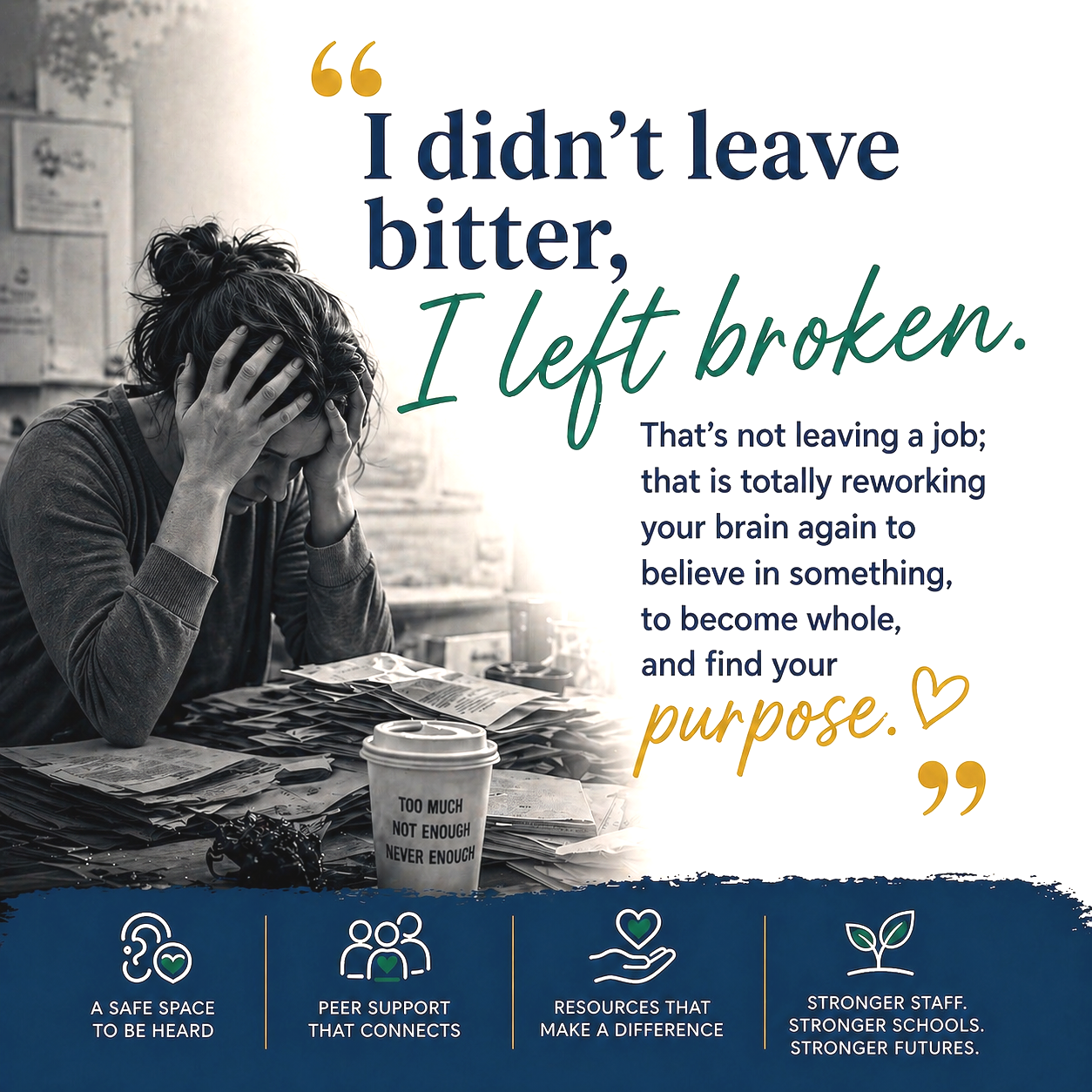
Supporting educator well-being is about more than reducing stress. It means understanding the emotional, psychological, and physical demands of working in schools.
Many educators experience situations that leave lasting effects long after the school day ends. By understanding these experiences, we can reduce stigma, encourage early support, and create healthier school communities where staff feel valued, supported, and able to continue doing the work they love.
School Culture
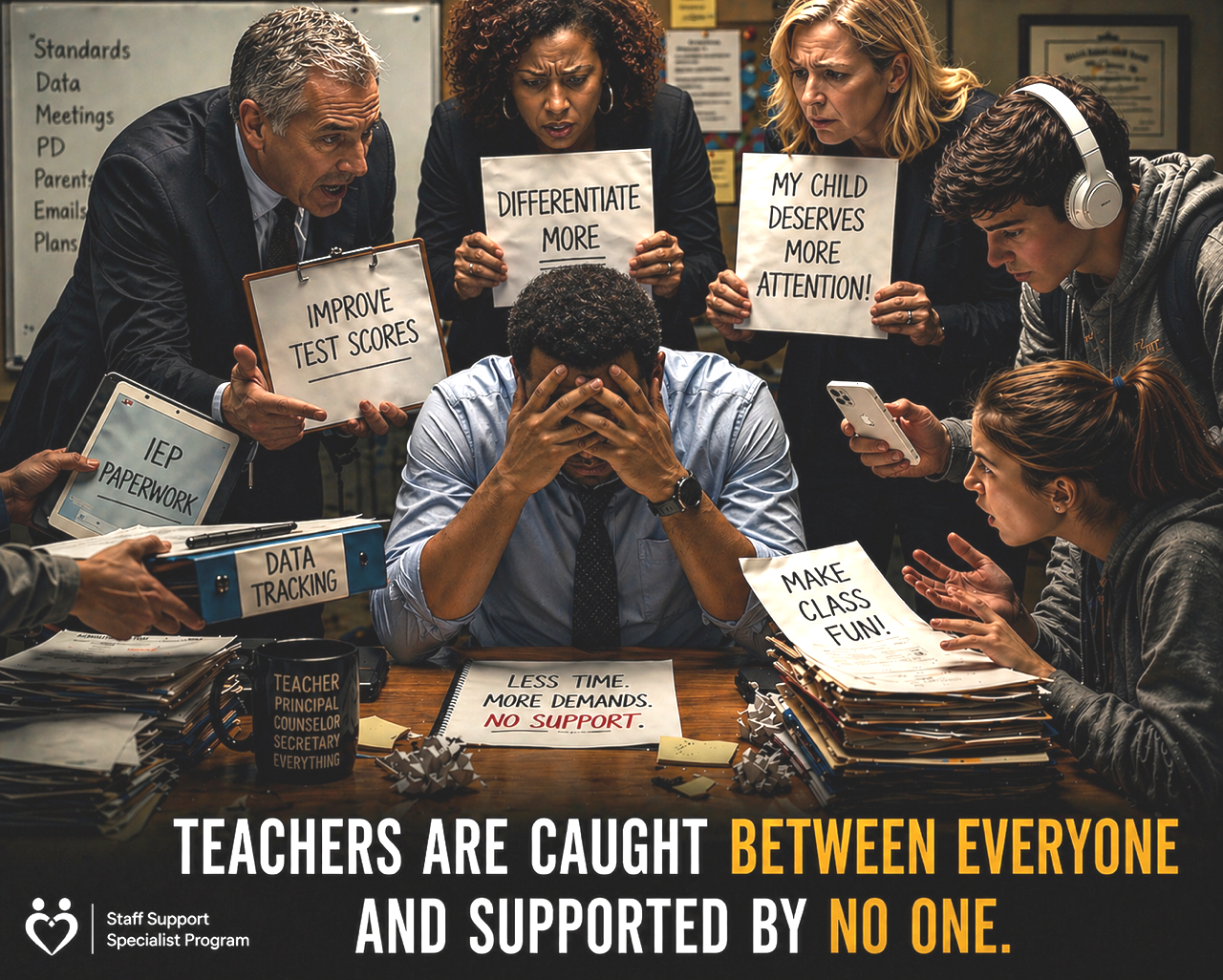
School culture is more than staff meetings, traditions, mission statements, or school-wide events. It is what people experience every day when they walk through the doors.
It is whether staff members feel respected. Whether they feel comfortable asking for help. Whether someone notices when they are struggling. Whether mistakes become opportunities for growth or reasons for fear. Whether difficult experiences are acknowledged or expected to be carried into the next school day.

A positive school culture does not mean that every day is easy of that conflict, stress, and difficult situations disappear. Schools are complex environments, and challenging days will always exist.
A supportive culture means people do not have to navigate those challenges alone.
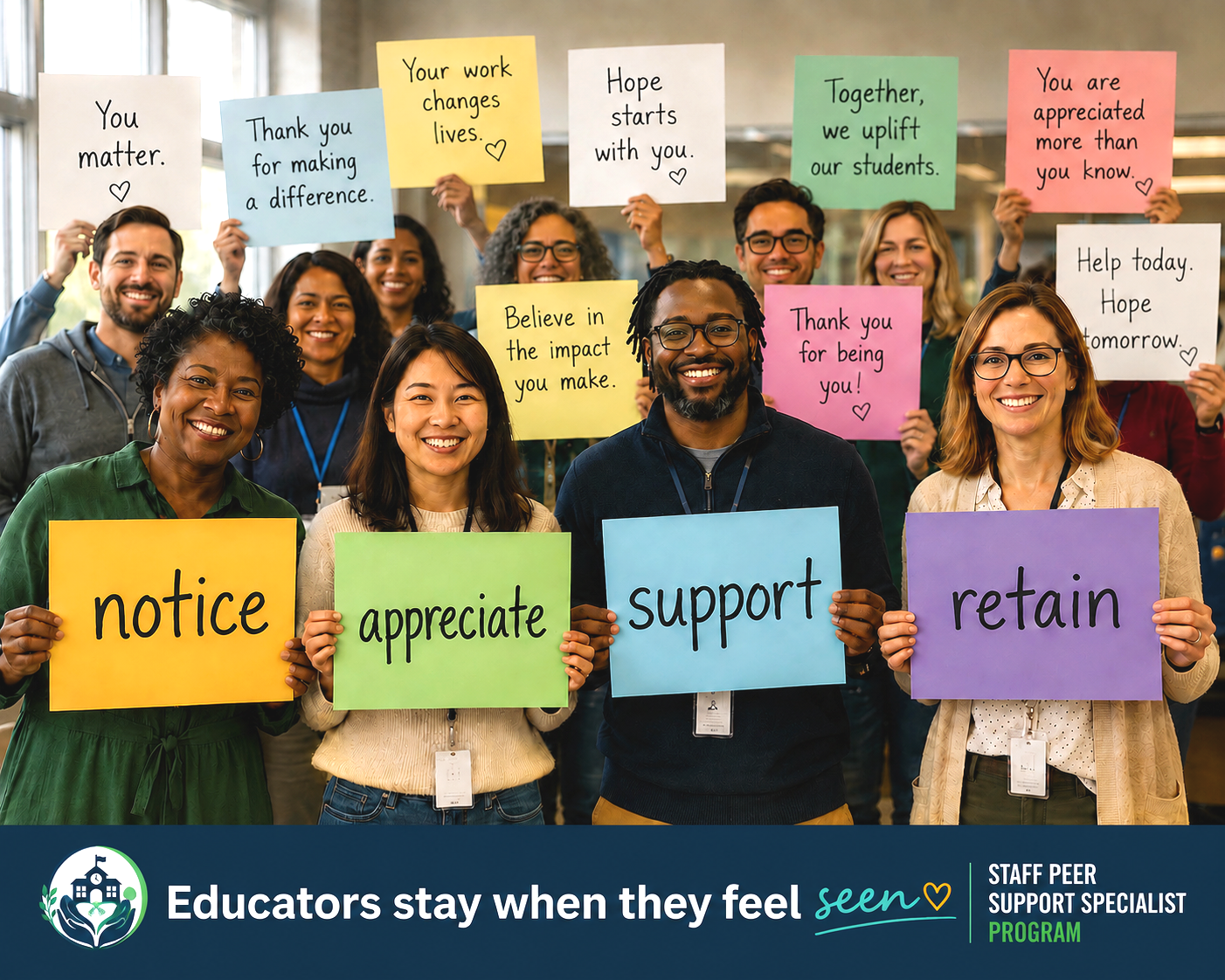
When educators feel valued, connected, heard, and supported, they are more likely to have the emotional capacity to continue doing the work they care about.
School culture affects more than morale.
It affects well-being, trust, collaboration, retention, and ultimately the students schools are working so hard to support.
HOPE RETURNS
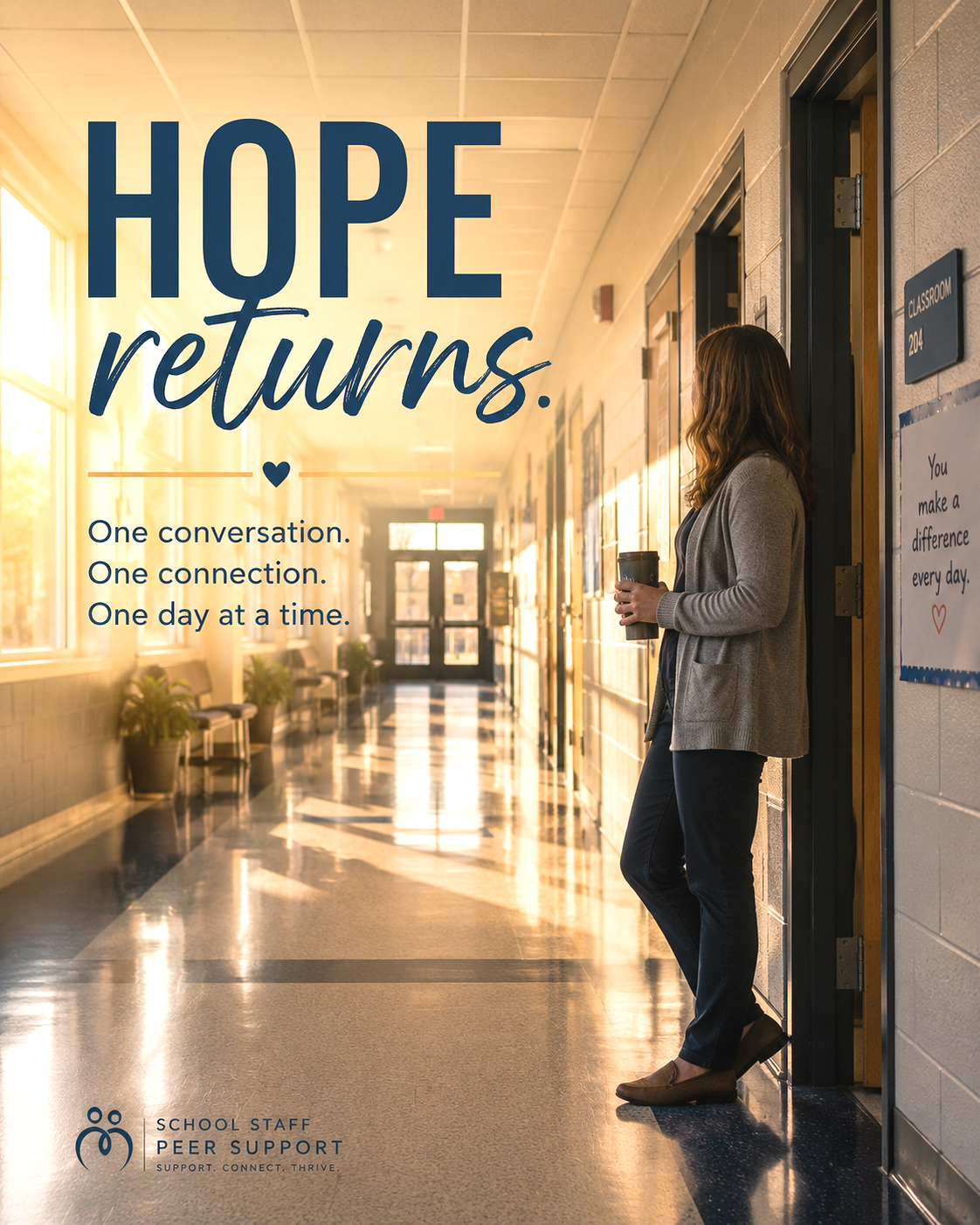
Hope doesn’t disappear all at once. It can fade after difficult days, challenging school years, classroom crises, personal loss, or simply carrying more than anyone was meant to carry.
But hope can return.
It often returns through the quiet moments—a coworker checking in, a supportive conversation, time to recover, or someone reminding you that you don’t have to face difficult days alone.
Whether you’re navigating a difficult season or simply looking for encouragement, we hope these resources remind you that hope isn’t lost. Sometimes, it just needs support to find its way back.
Sometimes, hope doesn’t return because everything changed. Sometimes, hope returns because someone showed up.