What signs have you noticed in yourself lately?
Not every exhausted educator is “just stressed”
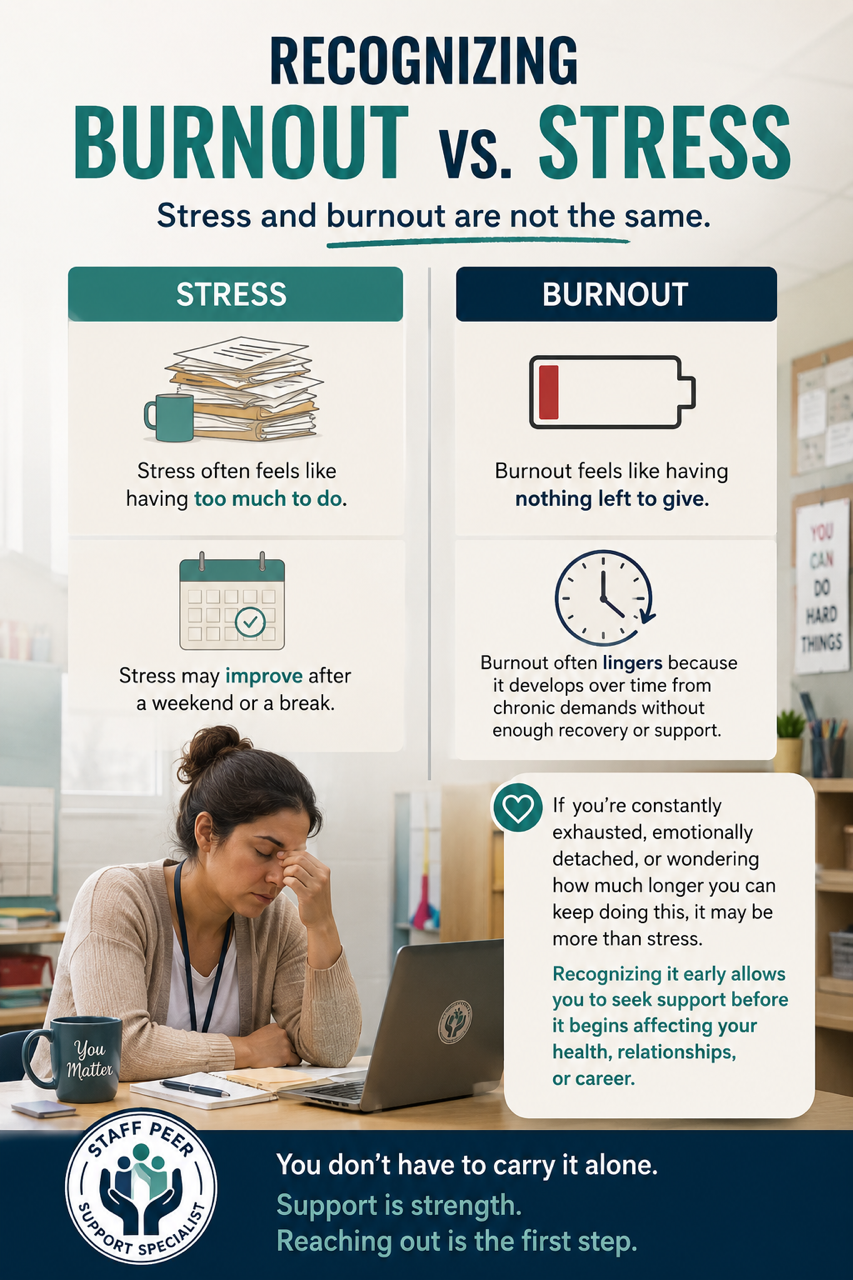
Burnout develops differently. It is the result of prolonged or chronic workplace stress without enough time, support, or opportunity to recover. Instead of feeling there is simply too much to do, burnout can leave you feeling emotionally depleted, detached from your work, and as though you have nothing left to give.
Many educators don’t realize they’ve moved from stress into burnout because the transition often happens gradually.
Common Signs of Burnout
You may be experiencing burnout if you notice:
feeling exhausted even after sleeping or taking time off
dreading work before the day begins
becoming emotionally detached from students, coworkers, friends, and family
feeling less patient than you used to be
difficulty concentrating or making decisions
feeling like nothing you do is ever enough
wondering how much longer you can continue your role
Why Educators Are Especially Vulnerable?
Educators often spend their days caring for everyone else. Supporting students through crisis, responding to challenging behaviors, balancing paperwork, and carrying emotional responsibilities can slowly drain the energy needed to remain healthy.
Many school employees continue showing up every day while quietly struggling. Burnout is not a reflection of dedication or resilience. It is often the result of prolonged demands without enough recovery and support.
Seeking support early, setting boundaries, giving time after incidents, and reaching out for help are encouraged to maintain healthy working habits and are not as difficult as trying to recover after complete exhaustion.
The sooner schools recognize it, the sooner schools can support one another.
Reflection Questions:
Am I feeling stressed, or am I feeling emotionally exhausted?
Have I had enough time to recover from recent challenges?
What is one thing I could do this week to support my own well-being?
Is there someone I trust enough to talk to about how I am feeling?
Teacher burnout in the U.S. has doubled or more in the past two decades, with current rates far exceeding those from the early 2000s. Attrition has risen sharply, and the profession is now facing a critical shortage. The combination of workload, pay, and systemic pressures has turned teaching into the most burned‑out profession in the country.
Understanding the Nervous System
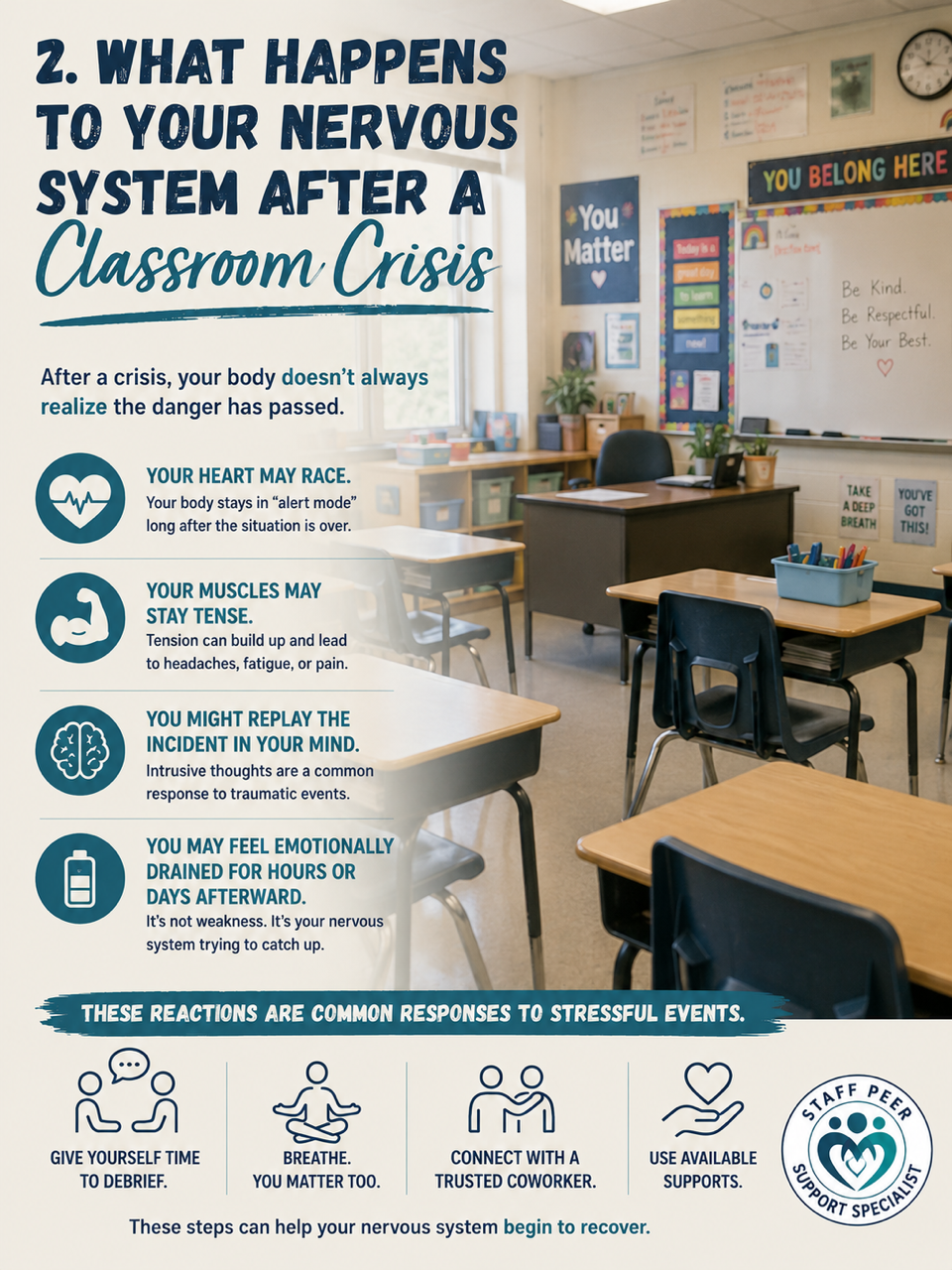
When a classroom crisis ends, your body doesn’t automatically recognize that you are safe.
During a stressful or traumatic event, your nervous system activates your body’s natural survival response. Stress hormones such as adrenaline and cortisol prepare you to react quickly by increasing your heart rate, tightening your muscles, sharpening your focus, and redirecting energy toward immediate survival.
Even after the situation has been resolved, your nervous system may remain in this heightened state. You might notice your heart continuing to race, muscle tension, shaking, headaches, exhaustion, difficulty concentrating, or replaying the incident repeatedly in your mind. Some educators also experience irritability, emotional numbness, trouble sleeping, or feeling “on edge” long after the crisis has ended.
Recovery takes time. There are healthy ways to help your nervous system return to a calmer state.
Take a few slow, intentional breaths
Allow yourself time to debrief after the incident
Connect with a trusted coworker or supportive supervisor
Stay hydrated and eat if you’ve missed a meal
Take a brief walk or gently move your body
Access available supports, such as your Employee Assistance Program (EAP; learn more below), peer support teams, or a mental health professional if symptoms persist or begin to affect daily life.
Educators are often expected to move immediately to the next responsibility after a crisis. But your nervous system may still be processing what just happened.
Supporting recovery isn’t just about helping educators feel better-it helps them remain healthy, present, and able to continue doing the important work they care so deeply about.
In a 2025 NEA nationwide poll of 2,889 educators, 4 out of 5 teachers and education support professionals said student behavior is a serious problem, with 81% reporting that students are acting out and misbehaving National Education Association.
A 2024 RAND Corporation study found 44% of teachers cited student behavior as the top source of job-related stress National Education Association.
Behavioral crises are not isolated to a few schools—they are pervasive, widespread, and systemic, affecting nearly all educators and significantly impacting instructional time, teacher well-being, and school stability. bonfireleadershipsolutions.com
Reflection Questions:
How does your body usually respond after a difficult classroom incident?
What physical signs tell you that you are still carrying stress?
Do you notice yourself replaying difficult situations long after they have ended?
What helps your nervous system feel safe again?
Who is someone at work you could reach out to after a challenging day?
If a coworker experienced what you experienced, what compassion or advice would you offer them?
What is one small thing you can do today to help your nervous system recover?
See Something, Say Something
Every educator experiences difficult days.
Whether it’s after a classroom crisis, a challenging interaction with a student or family, personal stress, or the cumulative effects of a demanding profession, many staff members carry more than others realize. While you may not be able to solve what someone is experiencing, you can help them feel less alone.
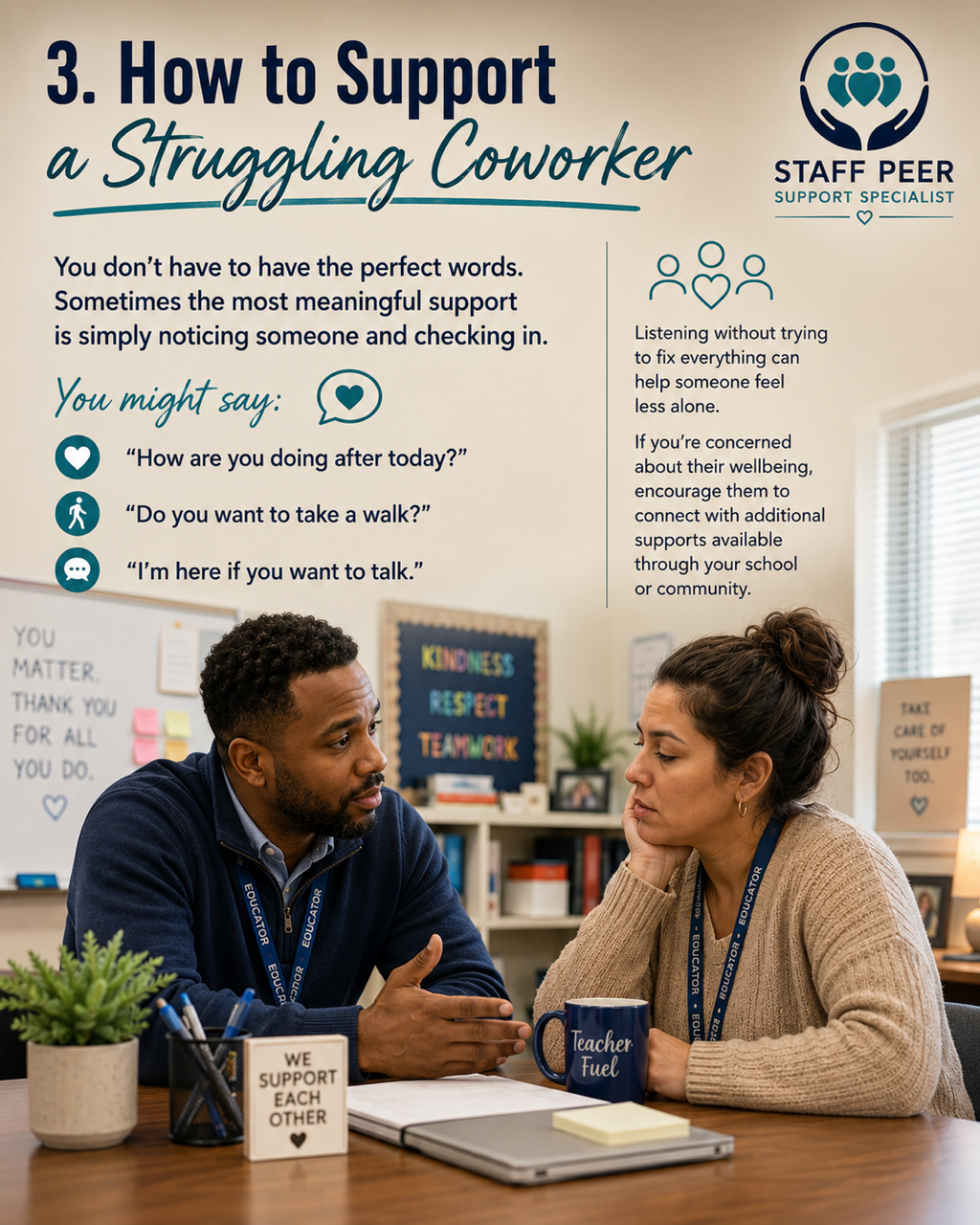
One of the most meaningful forms of support is simply noticing.
If a coworker seems quieter than usual, appears overwhelmed, or doesn't seem like themselves, consider checking in. You don’t need the perfect words or professional training to show compassion. A simple conversation can remind someone that they are seen and that someone cares.
Supportive school cultures are built through everyday actions. A conversation in the hallway, a check-in after a difficult incident, or simply sitting beside someone during a hard moment can strengthen trust and remind educators that they don’t have to navigate challenges alone.
You don’t have to change someone’s situation to make a meaningful difference. Sometimes, the simple act of showing up is exactly what they need.
Peer support programs in fire and police departments have been shown to improve emotional resilience, reduce burnout, and strengthen workplace culture. These programs connect staff with trained peers who have experienced similar stressors, offering confidential, empathetic support that can act as an early intervention for mental health concerns. Police1+1. Applying these principles to teachers—while adapting to their unique context—can yield similar benefits, fostering a more resilient, connected, and supportive school environment.
Reflection Questions:
Why do you think educators often feel expected to “move on” immediately after a crisis?
How could schools better support staff in the minutes and hours following a difficult incident?
What does a healthy debrief look like?
How can coworkers help one another regulate after a stressful event?
What changes could make your workplace feel psychologically safer after crises?
How can your school create a culture where checking in on one another feels normal?
If a coworker shared they were struggling, how would you respond?
What is one thing you could do this week to support a colleague?
Real People, Real Impact, Real Support
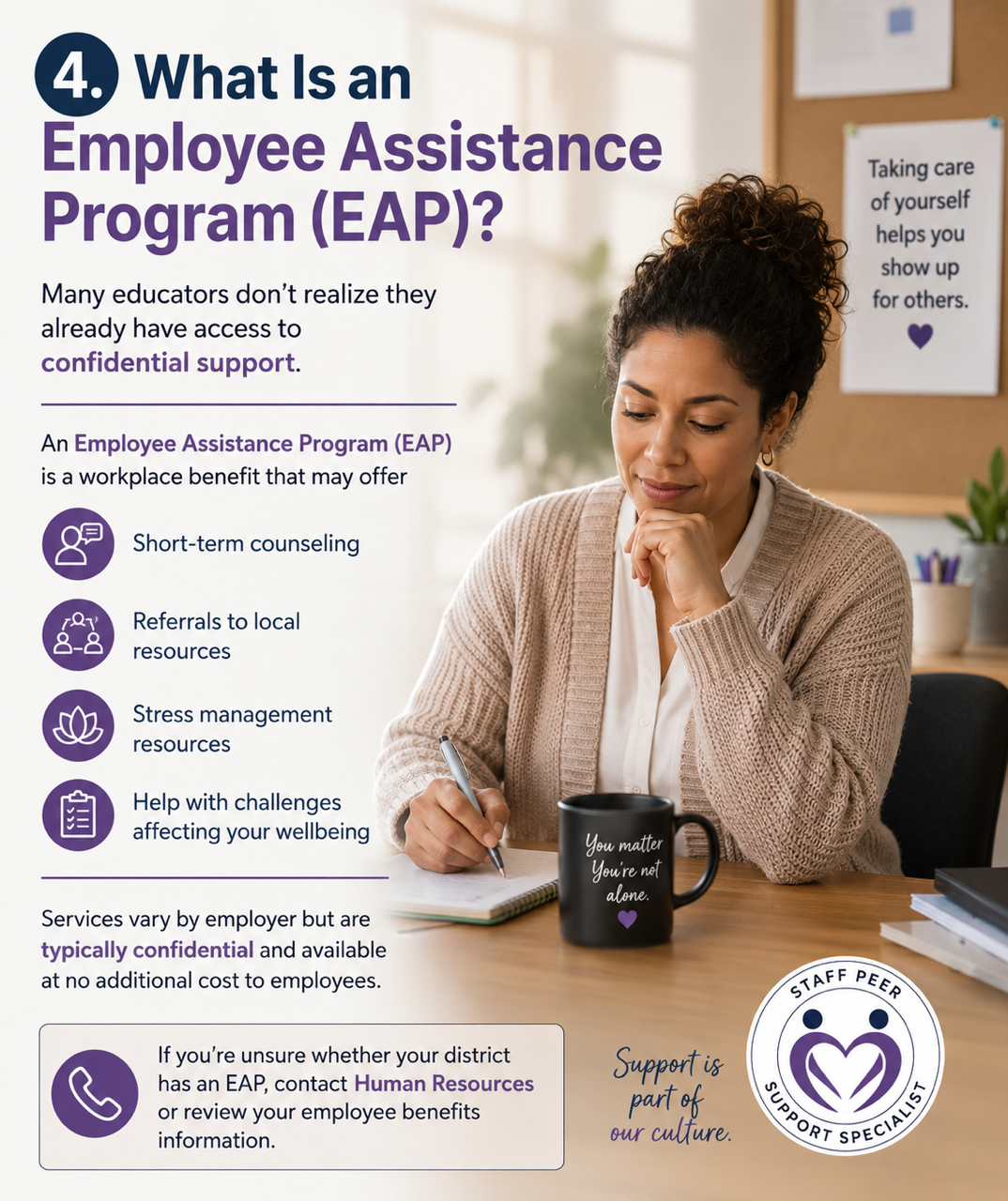
Did you know many school employees already have access to confidential mental health and well-being support through an Employee Assistance Program (EAP)?
What is an Employee Assistance Program?
An EAP is an employer-sponsored benefit designed to help employees navigate personal or work-related challenges. Depending on your district, services may include short-term counseling, referrals to community resources, stress management, and guidance for family concerns. These services are typically confidential and available at no additional cost to employees.
Many educators never use their EAP simply because they don’t know it exists or aren’t sure what it offers. You don’t have to wait until you’re in a crisis ot reach out. Whether you’re feeling overwhelmed, experiencing burnout, processing a difficult classroom incident, or need someone to talk to, an EAP may be a valuable place to start.
How to get in contact?
If you are unsure whether your school district offers an Employee Assistance Program, reach out to your building principal or contact your Human Resources department. Taking care of yourself isn’t selfish—it’s an important part of sustaining a long and meaningful career in education.
Supporting educators starts with making sure they know the resources available to them.
Employee coverage: About 74.1 million U.S. employees have access to an EAP burrconsultingllc.com.
Access by size: Larger employers (≥500 employees) have higher access rates; smaller employers (≤99 employees) have less AllOne Health.
Union vs. non-union: 78% of union employees have EAP access vs. 52% of non-union employees burrconsultingllc.com.
Reasons for low usage: Lack of awareness, confidentiality concerns, stigma, unclear communication, perceived irrelevance, or inconvenient access Meditopia+1.
Absenteeism reduction: Regular EAP users see a 40% drop in absenteeism worldmetrics.org.
Work-related stress impact: EAPs reduce the impact of work-related stress by 29% worldmetrics.org.
Reflection Questions:
If you were feeling overwhelmed, would you know where to find support?
What keeps people from using resources like EAP—lack of awareness, uncertainty, or stigma?
How might reaching out for support early change your wellbeing?
What would make you feel more comfortable asking for help?
What is one small step you could take this week to prioritize your own mental health?
How can schools do a better job of making staff aware of available wellbeing resources?
HOW ABOUT QR CODES IN STAFF ROOMS WITH INFORMATION ON EMPLOYEE ASSISTANCE PROGRAMS?
Support That Helps Us Heal
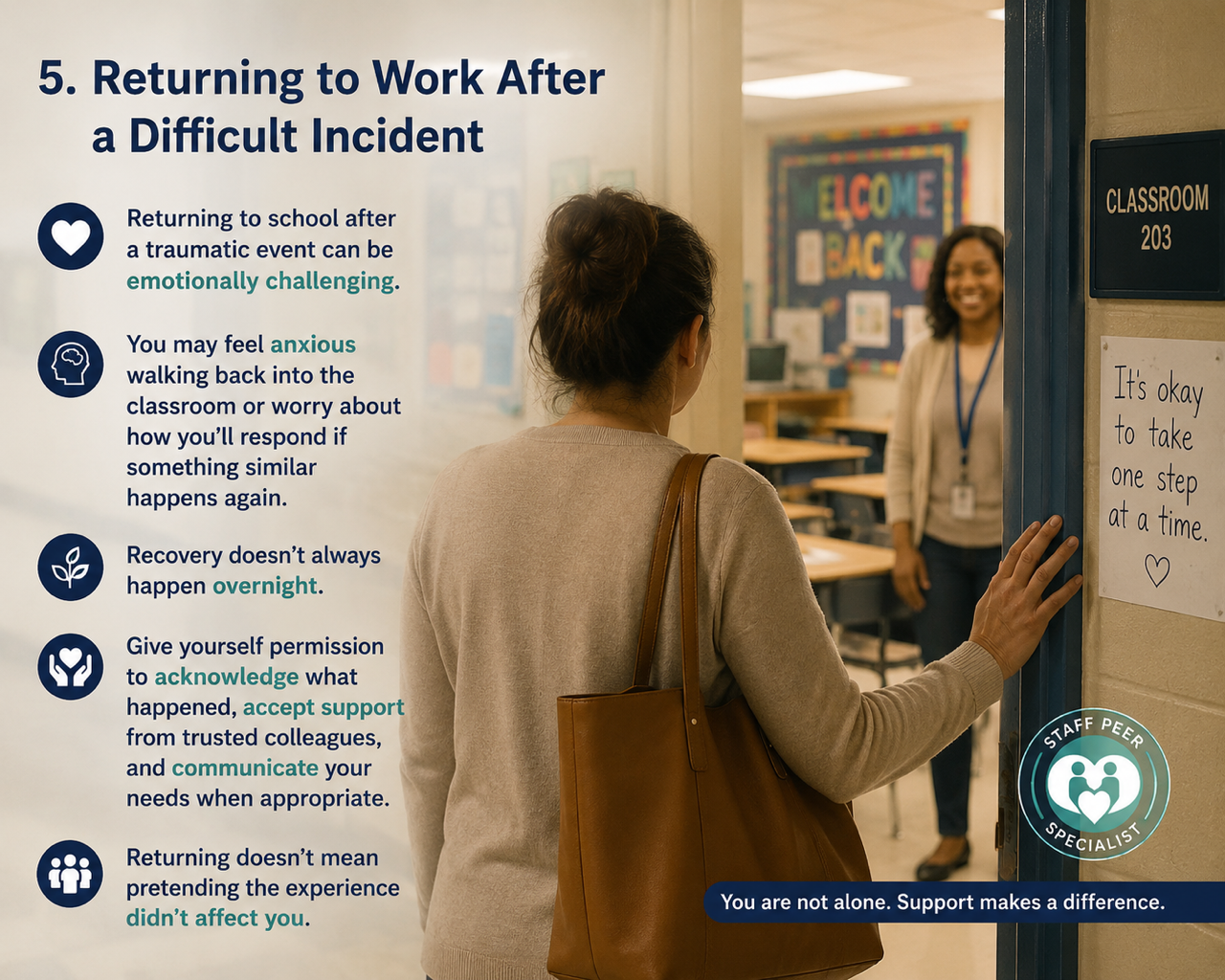
Returning to work after a stressful or traumatic event can be one of the most difficult parts of the recovery process. While others may see that you’re back in the classroom, they may not see the emotional impact you’re still carrying.
It’s common to feel anxious, hyper-vigilant, emotionally exhausted, or worried about experiencing a similar situation again. These reactions are normal responses to an abnormal event.
Recovery looks different for everyone. Taking time to process the experience, connecting with trusted colleagues, and using available supports can make returning to work feel healthier and more manageable.
Imagine…
an educator who experienced the death of their own child and now must return to teach other families and children? A young teacher is pregnant and has complications during pregnancy or miscarriage, and no longer is carrying her own baby, to return to school, where she de-escalates someone else’s child from hitting and disrespecting her.
Returning to work doesn’t mean pretending nothing happened. It’s having the right support to feel safe and move forward while permitting yourself to heal.
While exact return-to-school rates after personal or classroom crises are not shown in many sources, the evidence shows that behavioral challenges, safety concerns, and burnout are significant barriers to educator retention. This means that a substantial number of teachers may leave the profession or take time off after a crisis, and those who return often struggle to feel fully ready to step back into their classrooms.
Reflective Questions:
What emotions came up for you when you first return to work after a difficult incident?
Did you feel supported when you came back, or did you feel expected to move on quickly?
What would have made your return to work feel safer or more supported?
What does “feeling ready” to return to work mean to you?
Have you ever mistaken showing up for being okay?
What support do you wish every educator had after a traumatic classroom event?
How can schools create a culture where asking for support feels safe rather than stigmatized?
Connection. Support. Recovery
Understanding Compassion Fatigue
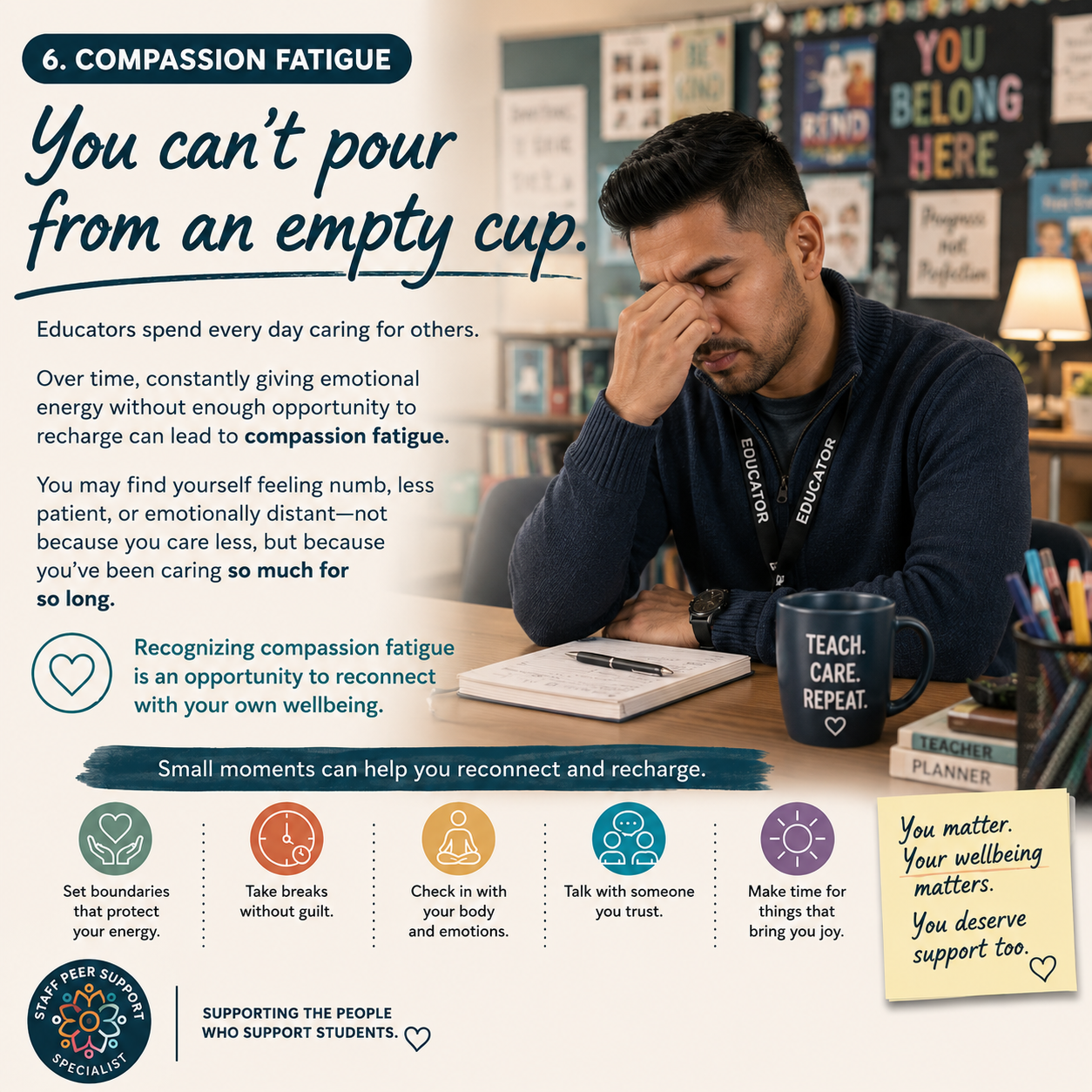
Educators are in helping professions. Every day, they support students through academic challenges, emotional struggles, behavioral crises, family hardships, and unexpected events. While this work is deeply meaningful, it also requires a tremendous amount of emotional energy.
Compassion fatigue is different from simply having a difficult day. It can develop gradually after repeated exposures to the emotional needs and stress of others. Many educators don’t notice it at first because they continue showing up, caring, and putting students’ needs ahead of their own.
You might notices signs such as:
Feeling emotionally drained or “numb”
Having less patience than you normally do
Feeling detached from students and coworkers
Finding it harder to experience joy in work that once felt rewarding
Feeling exhausted even after time off
Becoming more irritable or overwhelmed by situations that previously felt manageable
These reactions don’t mean you’re a bad educator or that you’ve stopped caring. In fact, they often occur because you’ve cared so deeply for so long.
Recognizing compassion fatigue is not about labeling yourself—it’s about understanding what your mind and body may be communicating. Awareness creates the opportunity to pause, reconnect with your own needs, and access support before emotional exhaustion becomes more significant.
Reflective Questions:
When was the last time you truly felt emotionally recharged?
Are you carrying stress from work long after the school day ends?
Do you feel like you are constantly giving to others, but rarely making time for yourself?
What signs does your body show when emotionally exhausted?
When someone asks, “How are you?” do you answer honestly?
If a coworker felt the way you do today, what would you say to them? Why is it harder to offer that same compassion to yourself?
You spend so much time caring for others. When was the last time you gave yourself that same compassion?
When Caring Becomes Heavy
Secondary Stress in Education
Educators witness far more than academic learning. They often support students through grief, abuse, neglect, family crises, mental health concerns, aggressive behaviors, and other difficult life experiences. While providing that support is an important part of the profession, repeated exposure to the trauma of others can have a lasting impact on the people providing the care.
The experience is known as secondary traumatic stress. It refers to the emotional, psychological, and physical effects that can develop after being repeatedly exposed to another person’s trauma. Secondary traumatic stress has been recognized among many helping professions, including education, healthcare, counseling, emergency services, and social work.
Educators experiencing secondary traumatic stress may notice:
intrusive thoughts or replaying difficult incidents
feeling anxious, on edge, or emotionally overwhelmed
trouble sleeping or relaxing after work
emotional numbness or feeling detached
difficulty concentrating
increased irritability or feeling emotionally exhausted
avoiding reminders of difficult situations
feeling like they are carrying the weight of students’ experiences home
These reactions do not mean someone is weak or incapable of doing their job. They are understandable human responses to repeated exposure to difficult experiences.
While no one can eliminate every stressful situation in schools, support can make a meaningful difference.
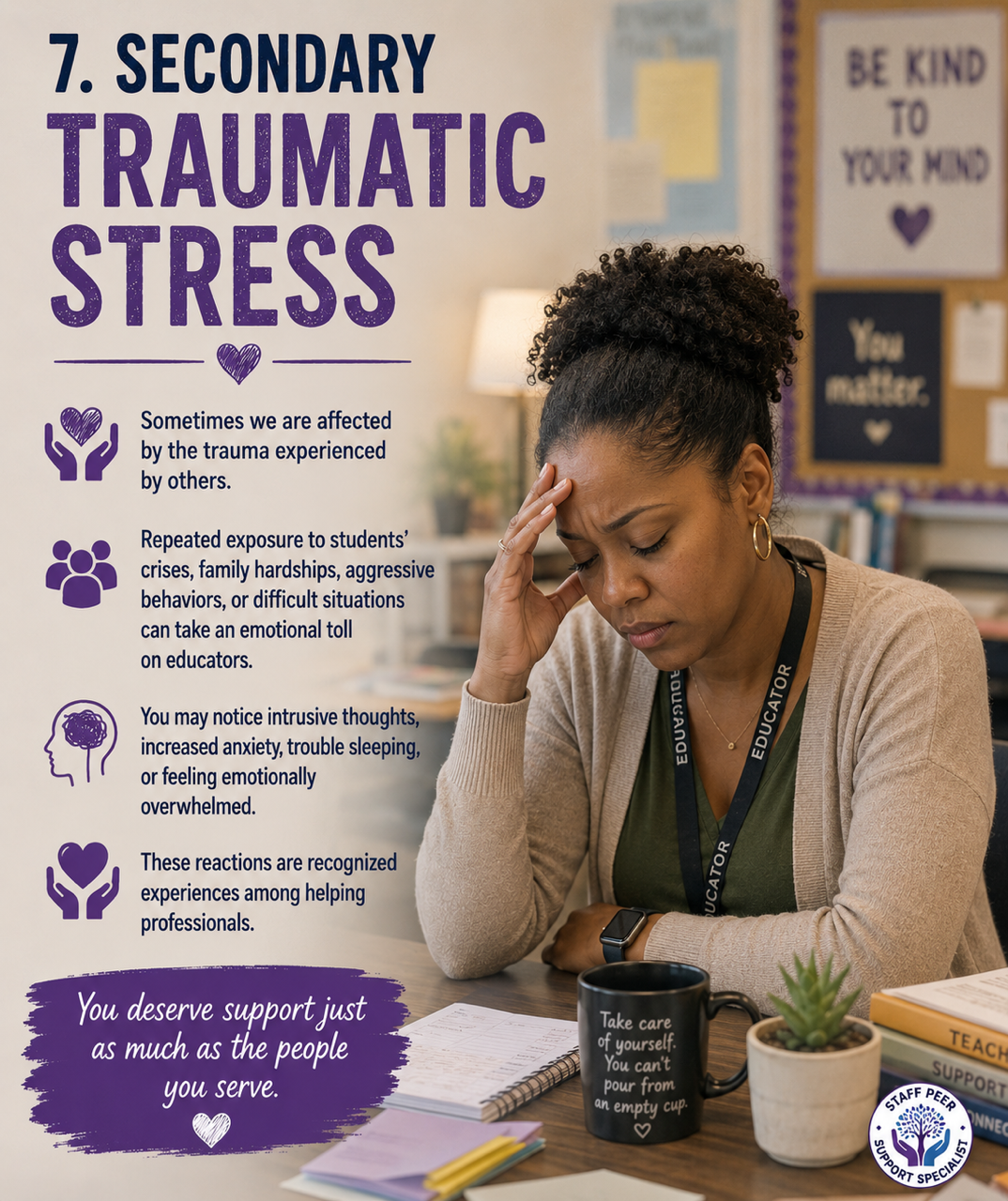
Educators spend their careers helping students feel safe, supported, and cared for. They deserve those same opportunities themselves. Recognizing secondary traumatic stress is an important step toward creating healthier schools where supporting staff is viewed as an essential part of supporting students.
Reflective Questions:
Do you find yourself playing difficult student situations long after they have ended?
Have you noticed that students’ traumatic experiences stay with you even after you leave work?
Do you feel emotionally overwhelmed after supporting students through a crisis?
Have you become more anxious, hypervigilant, or emotionally affected because of what you have witnessed at work?
Are you having trouble sleeping or relaxing after a particularly difficult day at school?
Have you started avoiding certain situations because they remind you of a difficult incident?
Have you found yourself thinking, “I should be able to handle this,” while quietly struggling with what you have experienced?
Small Steps. Lasting Impact.
Healthy Boundaries
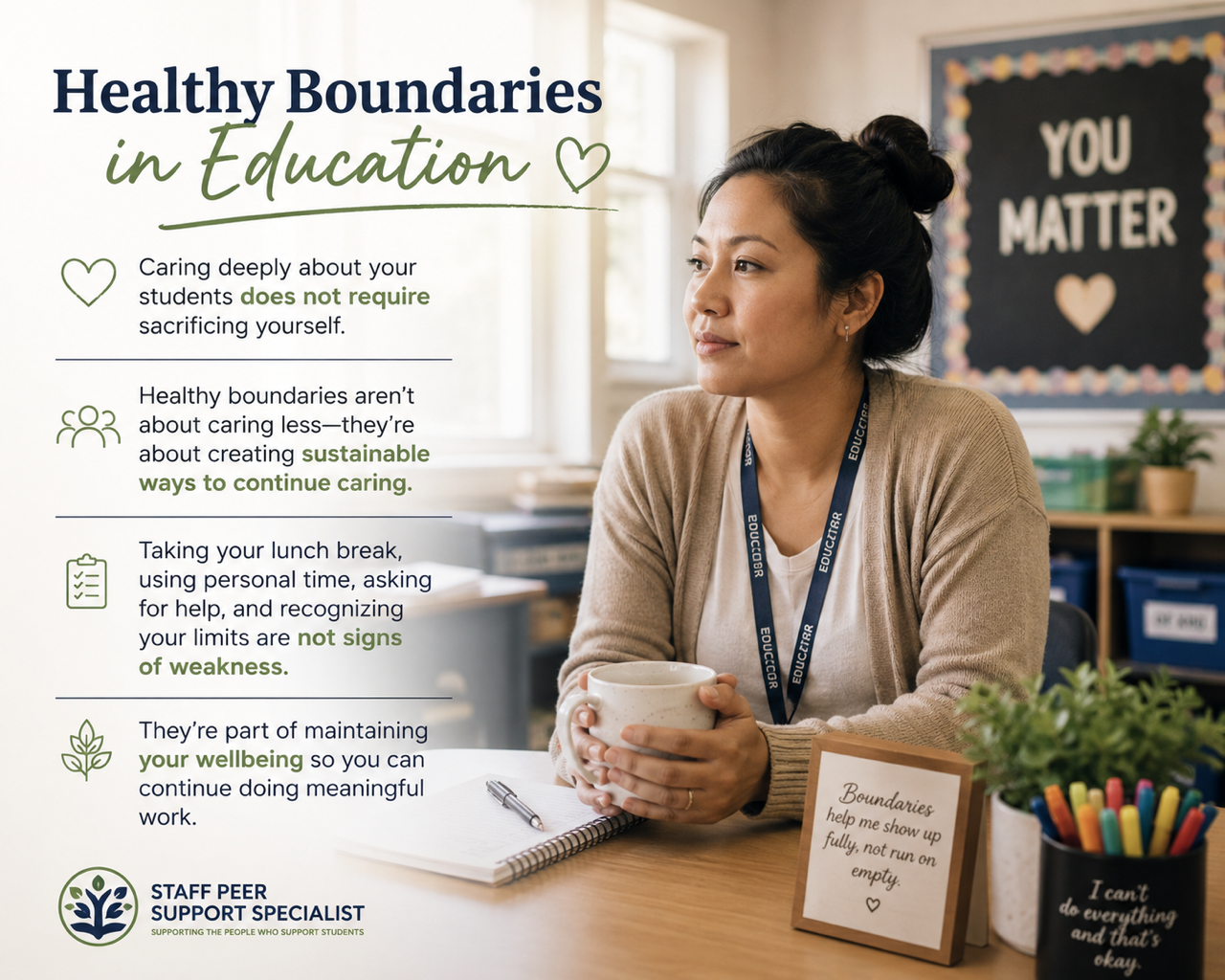
Many educators enter the profession because they genuinely care about students. They stay late to prepare lessons, answer emails after hours, spend their own money on classroom supplies, and put the needs of others before their own. While these actions often come from a place of compassion, consistently neglecting your own needs can contribute to chronic stress, burnout, and compassion fatigue.
Healthy boundaries are not about caring less. They are about creating sustainable ways to continue caring over the long term.
Setting boundaries may look different for every educator. It might mean taking your full lunch break, using your personal days without guilt, avoiding work emails late at night, asking a colleague for support after a difficult incident, or recognizing when you need time to recover. These choices protect your physical and emotional well-being while helping you remain present for your students.
Boundaries also allow educators to model healthy habits. When school staff demonstrates self-respect, balance, and the importance of asking for help, they reinforce valuable life skills for the students they serve.
Supporting educators means creating school cultures where boundaries are respected rather than viewed as a lack of commitment. Leaders, coworkers, and peer support programs all play an important role in encouraging staff to care for themselves without guilt.
You can care deeply about your students while also caring for yourself. In fact, the two often go hand in hand. Protecting your well-being isn’t stepping away from your purpose—it’s helping ensure you can continue fulfilling it for years to come.
Reflective Questions:
Do you feel guilty when you prioritize my own well-being? Why?
Are you carrying responsibilities that were never meant to be yours to carry alone?
How do you know when you are approaching your limit?
What message are you sending yourself when you believe you always have to say “yes”?
What would taking care of yourself look like today—not someday, but today?
Are you taking responsibility for things you can not control?
Are your boundaries based on guilt or on what is sustainable?
Do you make time for your own needs with the same intention you give to others?
How can you support a coworker and respect your own boundaries?
Can you continue caring for others if you never care for yourself?
How would you define success if it included your own well-being, not just your students’ achievements?
What would it look like to leave work knowing you did enough for today?
Asking for Help is a Strength
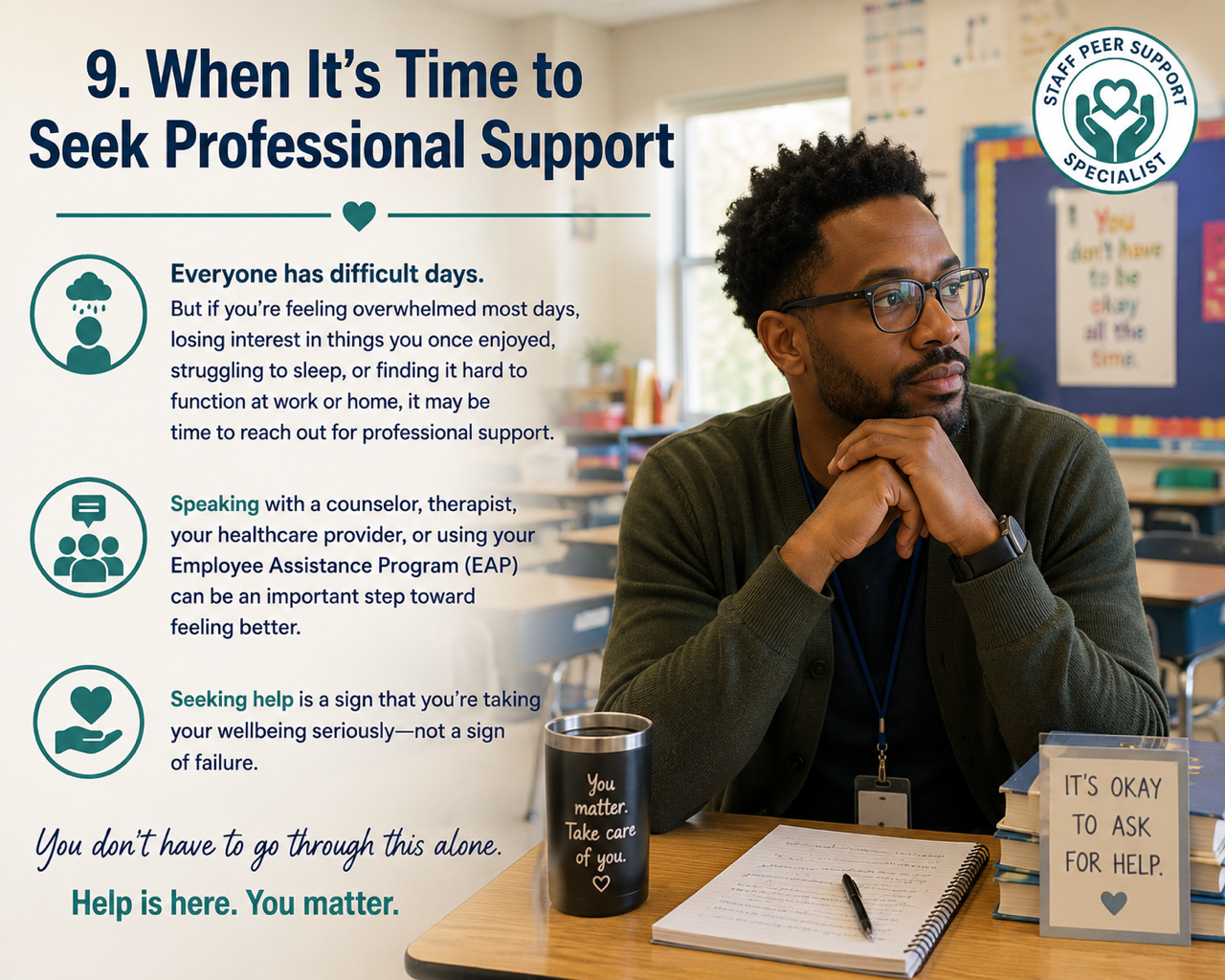
Everyone experiences periods of stress. Teaching and working in schools can be emotionally demanding, and difficult days are a normal part of the profession.
Most educators are used to pushing through challenges. They continue showing up for their students, coworkers, and school communities despite feeling exhausted or emotionally drained. But there comes a point when simply “getting through the day” may no longer be enough.
Professional support doesn’t mean you have failed or that you are not resilient. In fact, recognizing when you need help is an important part of maintaining your well-being. Speaking with a licensed counselor, therapist, psychologist, healthcare provider, or using your school’s Employee Assistance Program can provide practical tools, emotional support, and guidance during challenging times.
Taking care of your mental health is just as important as taking care of your physical health. Reaching out early can prevent stress from becoming more overwhelming and can help you regain a sense of balance before you reach a crisis point.
As educators, we encourage students to ask for help when they need it. Educators deserve to extend that same compassion to themselves.
Reflective Questions:
How have you been feeling emotionally over the past few weeks?
Are you simply having a difficult year, or have these feelings become your new normal?
Are you surviving each day, or are you truly living it?
Have you stopped enjoying activities or relationships that used to bring you joy?
How has stress been affecting your sleep, energy, or ability to focus?
Have the people closest to you noticed that you seem different?
What has kept you from reaching out for support?
Are you giving yourself the same compassion that you would offer your students or colleagues?
What would it feel like to believe that asking for help is a sign of strength rather than weakness?
Do you believe you deserve support, or do you believe you should be able to handle everything on your own? why?